
This post was originally published on April 3, 2026
The latest update to this post was made 6 months ago ago.
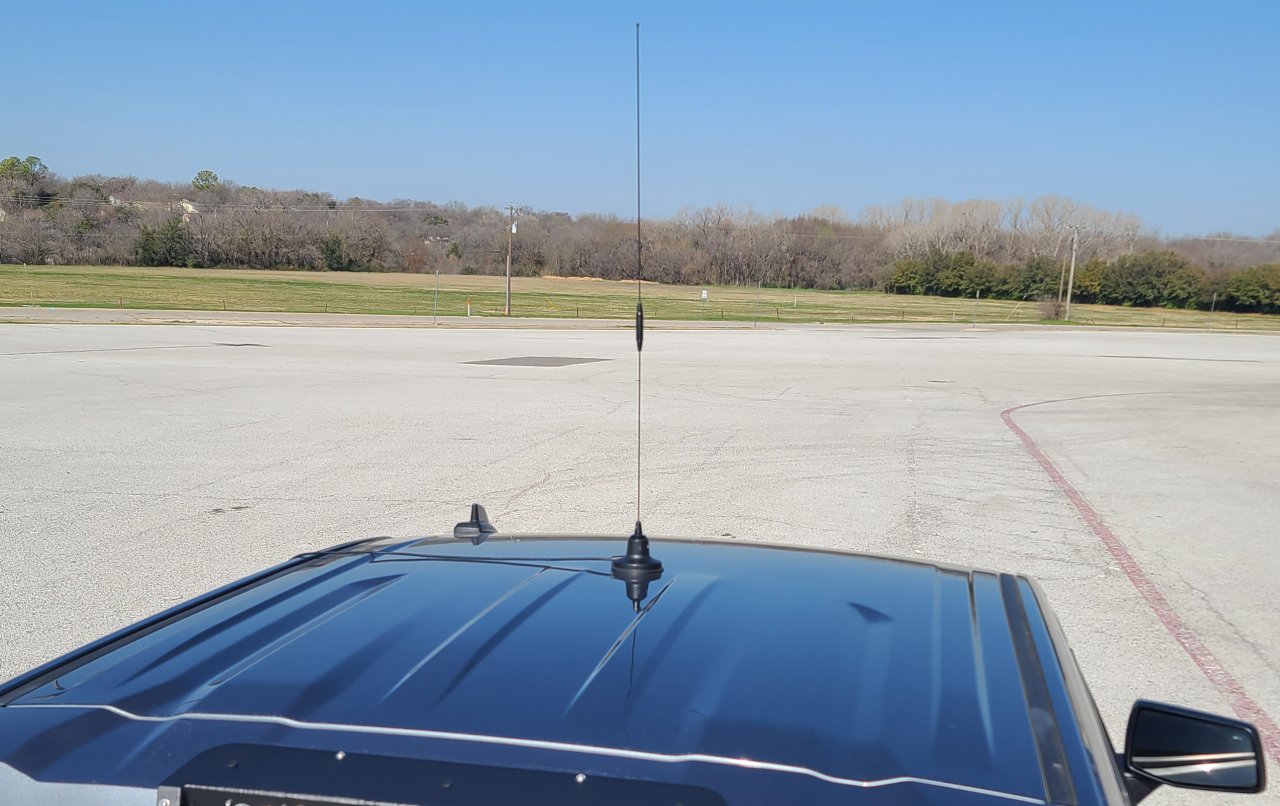 How Important Is The Ground Plane On A Mobile Ham Antenna?
What Is An Antenna Ground Plane?
In mobile installations, the ground plane provides the antenna with a reference plane against which to radiate and receive signals.
- Without an adequate ground plane, the efficiency and effectiveness of the antenna can be significantly decreased.
- The ground plane is crucial for the proper performance of a mobile ham radio antenna.
- Ground planes on antennas have nothing to do with electrical or earth grounding.
- Larger ground planes are typically needed for lower frequencies.
- Smaller ground planes are typically needed for higher frequencies.
Why The Ground Plane Is Important
Radiation Efficiency: The ground plane acts as a reflective surface for the antenna’s radiation. Without a proper ground plane, a significant portion of the energy transmitted by the antenna may be lost as ground losses, reducing the overall radiation efficiency of the antenna.
Antenna Pattern: The presence of a ground plane helps shape the radiation pattern of the antenna. A well-designed ground plane can help achieve a more omnidirectional radiation pattern, ensuring uniform coverage in all directions around the vehicle.
Counterpoise: In mobile installations, the vehicle itself can serve as part of the ground plane. However, the effectiveness of the vehicle’s metal body as a ground plane can vary depending on factors such as size, shape, and composition. Additional measures may be necessary to supplement or enhance the vehicle’s ground plane, such as adding ground plane radials or using specialized antenna mounts with built-in ground planes.
Antenna Tuning: The presence of a ground plane can affect the electrical characteristics of the antenna, including its impedance and resonance. Properly tuning the antenna to match the impedance of the feedline and transceiver requires consideration of the ground plane’s influence on antenna performance.
Samples
If you don’t have adequate “metal” space on your vehicle roof, have fiberglass roofing (as in what many boats or some RVs have), ragtops, etc. Adding a ground plane could help enhance your signal and increase overall range/clarity.
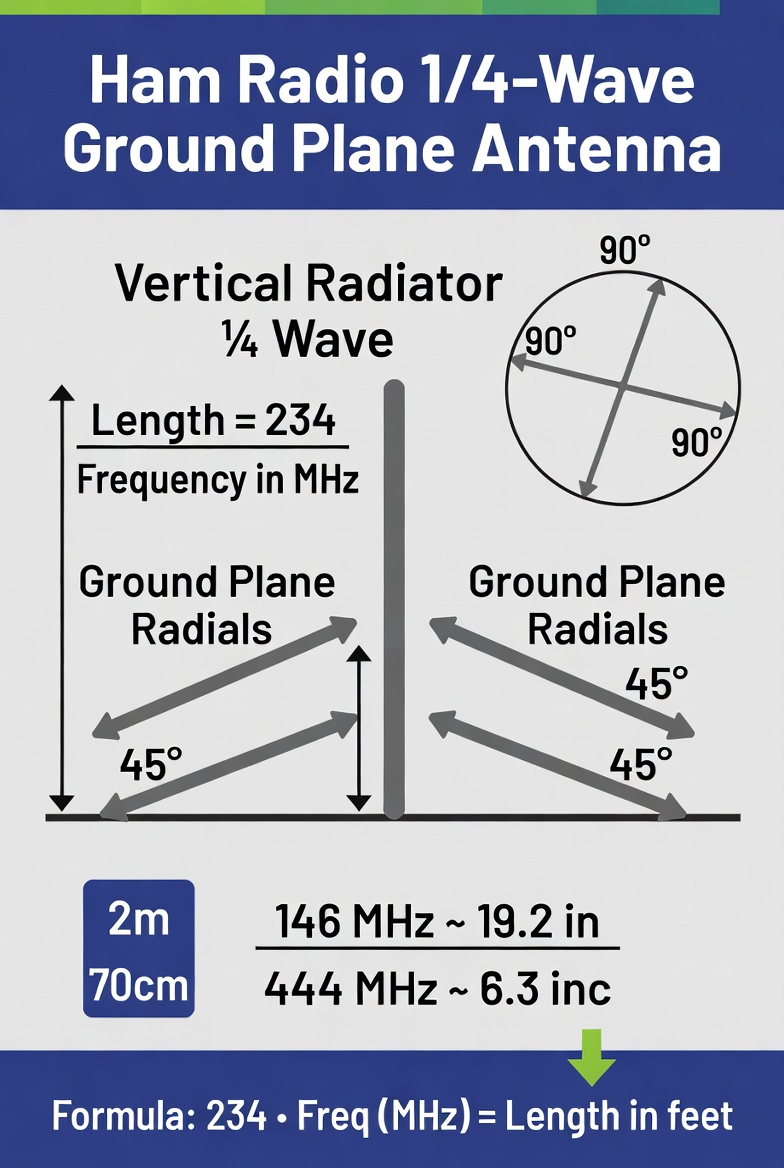
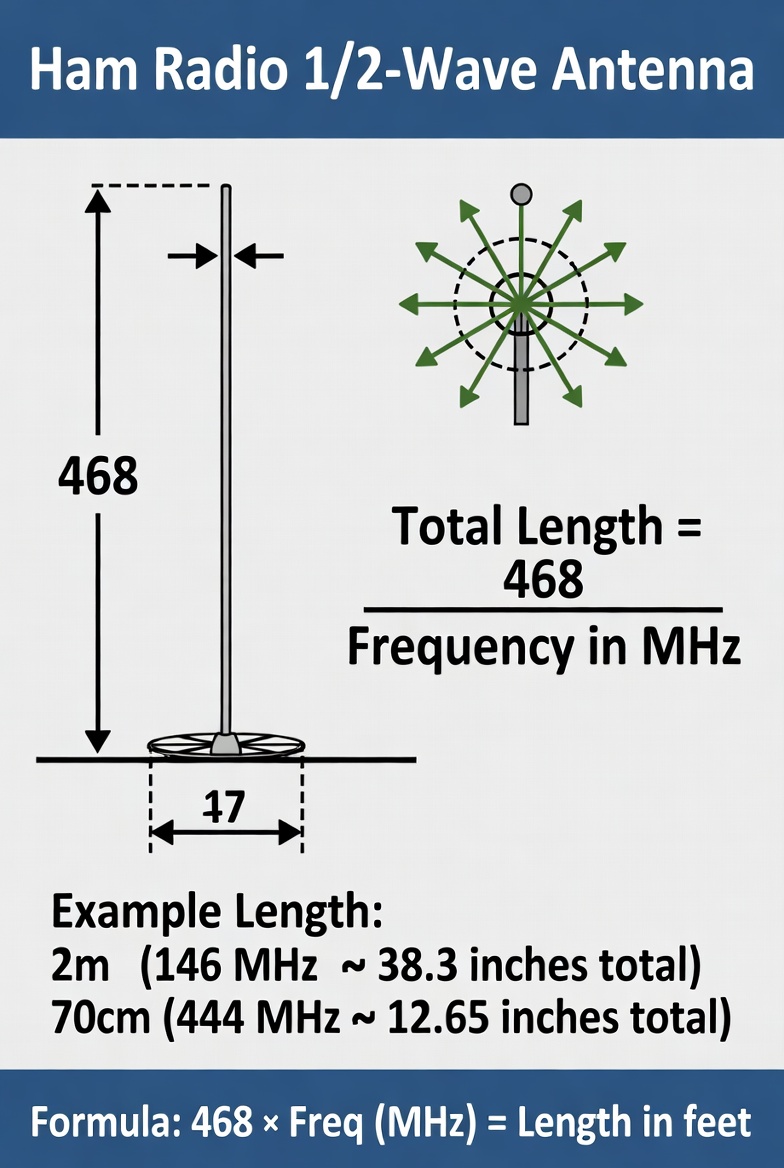
Antenna ground planes should be at least 1/4 of the wavelength of the signal being broadcast using a 1/4 wave antenna. 1/2 and 5/8 antennas will need larger ground planes. To figure out the size of a needed ground plane, you would use the following formula:
To quickly figure out how much ‘ground plane space’ you should have using radials, the following formula can be used:
- General ground plane radial length for 1/4 wave = (234 / Frequency Used)
- General ground plane radial length for 1/2 wave = (468 / Frequency Used)
For example:
- 1/4 wave ground plane base (at 147.015MHz) = ~1.6ft
- 1/2 wave ground plane base (at 147.015MHz) = ~3.2ft
 |
 |
- Sample CB Frequency = 27.065 MHz
- CB 1/4 wave | (234/27.065) = ~8.64ft in all directions around the base of the antenna
- CB 1/2 wave | (468/27.065) *12 = ~17.29ft in all directions around the base of the antenna
- Sample 2m Frequency = 146.520 MHz
- 2m 1/4 wave | (234/146.520) = ~1.59ft in all directions around the base of the antenna
- 2m 1/2 wave | (468/146.520) = ~3.19ft in all directions around the base of the antenna
- Sample 70cm Frequency = 444.000 MHz
- 70cm 1/4 wave | (234/444.000) = ~0.527ft in all directions around the base of the antenna
- 70cm 1/2 wave | (468/444.000) = ~1.054ft in all directions around the base of the antenna
Ground planes can be circular or rectangular as long as the size is needed is covered in all directions. Ground planes can be any type of metal including: sheet metal, circular saw blades, cookie sheets, paint can lids, etc. Proper ground plane adapters are also available at many radio stores (or search Ground Plane Base on Amazon!).
In Our Tests
Of course we had to try this out for ourselves. It was a fairly simple test… The subjects used identical radio hardware at 25 watts, identical antennas (magnetic mount 1/2 wave, 2 meter @ 147.135 MHz) but the vehicles were different.
- Vehicle #1 was a extended cab Chevy pickup truck with the mag mount antenna on the center of a nearly square metal roof.
- Vehicle #2 was a Kia Sorento with full glass sunroof/moonroof (consumes about 3/4 of the roof on the vehicle). The antenna is mag mounted on last 1/4 of the metal roof (think rectangular shape).
The results were noticeable!
- Vehicle #1 had significantly better transmit/receive, by between 3 and 6 miles – the audio was more understandable in the test zone, even on the outer edges of coverage.
- Vehicle #2 lost signal more often, especially in valleys and often received just static on the outer edges of the coverage zone tested in.
Based on our testing, the larger ground plane really did make a difference on the mobile magnetic mount antenna!
In Conclusion
The ground plane is essential for the performance of a mobile ham antenna. It serves as a reflective surface, shapes the radiation pattern and affects antenna tuning and efficiency. Ham radio operators should ensure that their mobile antenna installations include an adequate ground plane to maximize the effectiveness of their antennas and optimize transmit/receive performance.
If you don’t have adequate “metal” space on your vehicle roof, have fiberglass roofing (as in what many boats or some RVs have), ragtops, etc. Adding a ground plane could help enhance your signal and increase overall range/clarity.
Tags: #HamRadio #AmateurRadio #MobileHamRadio #HamRadioAntenna #GroundPlane #MobileAntenna #HamRadioMobile

Be the first to comment