This post was originally published on February 20, 2024
The latest update to this post was made 60 minutes ago ago.
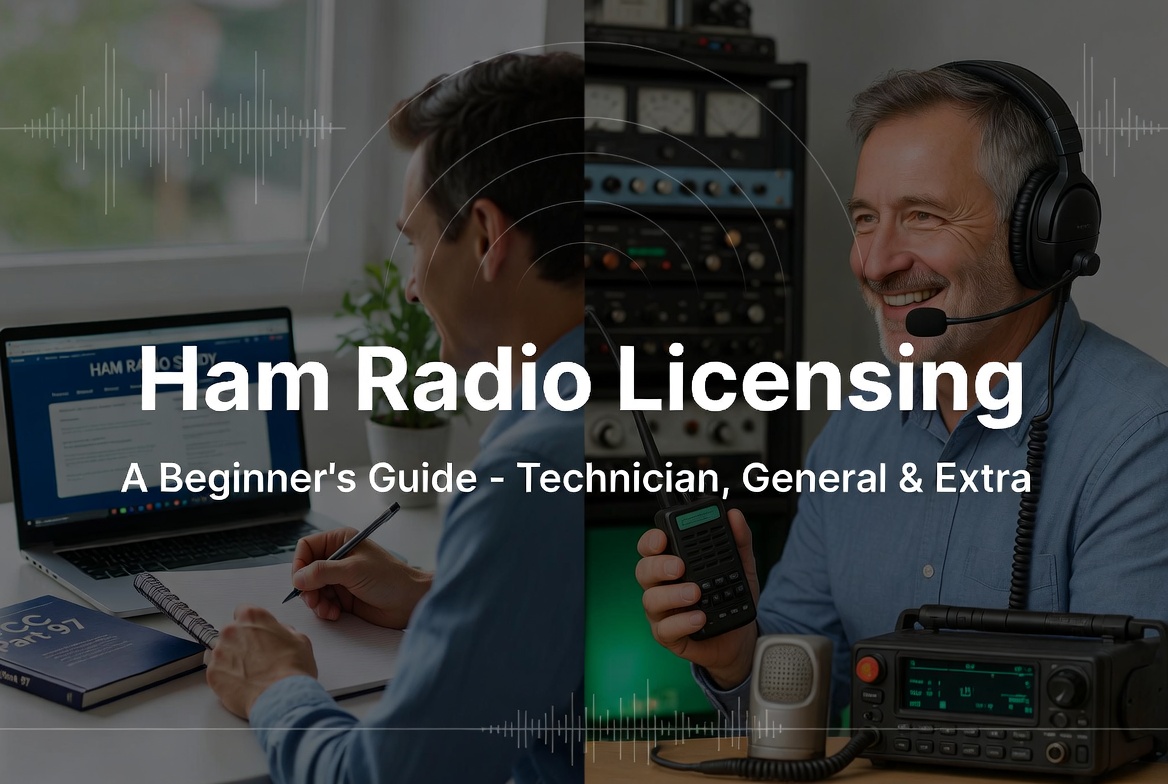 Ham Radio Licensing: A Beginner’s Guide
Amateur radio (ham radio) opens the door to worldwide communication, technical experimentation, and a welcoming global community. But before you can legally transmit, you need a license. This guide explains the licensing process, FCC regulations in the United States, and the basic operating guidelines every ham should follow.
The Licensing Process
In the United States and most countries, you must pass an exam before transmitting on amateur radio frequencies. The exam tests your knowledge of radio theory, regulations, and safe operating practices.
The U.S. offers three license classes, each with increasing privileges:
- Technician – Entry-level license. Gives you access to all VHF and UHF bands (including the popular 2m and 70cm bands) and limited HF privileges.
- General – Unlocks most HF bands for long-distance communication (DXing) and more operating modes.
- Extra – The highest level, granting full access to all amateur frequencies and maximum privileges. Extra license holders usually have advanced technical knowledge.
The exams are multiple-choice and drawn from publicly available question pools. Many people study using free resources such as HamStudy.org, the ARRL License Manual, or online practice exams. Most first-time applicants aim for the Technician license, which is the most beginner-friendly.
FCC Regulations (United States)
Amateur radio in the U.S. is regulated by the Federal Communications Commission (FCC) under Part 97 of their rules. Here are the most important things new hams need to know:
- Frequency Allocations: The FCC assigns specific bands for amateur use. VHF/UHF bands (like 2 meters and 70 cm) are great for local communication, while HF bands allow worldwide contacts.
- Station Identification: You must identify your station with your assigned call sign at the beginning and end of each transmission, and at least every 10 minutes during longer contacts.
- Operating Privileges: Your license class determines which frequencies, modes (voice, Morse code, digital), and power levels you may use.
- Power Limits: Most bands allow up to 1,500 watts, but you should always use the minimum power necessary to make contact.
These rules exist to prevent interference and ensure the amateur bands remain available for everyone.
Operating Guidelines & Best Practices
Having a license is only the beginning. Good operators follow these important guidelines:
- Follow Band Plans — Every band has recommended segments for different modes (CW, SSB, digital, etc.). Respect these informal agreements to avoid stepping on others.
- Listen First — Always listen on a frequency before transmitting to avoid interrupting an ongoing conversation.
- Use Minimum Power — Use only the power needed to maintain clear communication.
- Be Courteous — Speak clearly, use proper phonetics when needed, and treat other operators with respect. Avoid controversial topics or rude language on the air.
- Support Emergency Communications — One of the core purposes of ham radio is to provide backup communication during disasters. Being prepared and familiar with local emergency nets is highly encouraged.
Final Thoughts
Amateur radio licensing and regulations exist to keep the hobby safe, organized, and beneficial to the public. By understanding the rules and operating responsibly, you’ll not only enjoy the hobby more — you’ll also help preserve it for future generations.
Whether you’re working toward your first Technician license or upgrading to Extra, embracing the responsibilities that come with ham radio is what makes the community strong.
Tags: #HamRadio #AmateurRadio #HamRadioLicense #HamRadioLicensing #HamRadioBeginner #HamRadioForBeginners

Be the first to comment